Is a portable power station the same as a generator?
Updated October 6, 2026
Short answer
No. The CPSC warns never to use a portable generator indoors or in a garage because it produces deadly carbon monoxide. That warning names generators. The four power stations on our shortlist are LiFePO4 battery packs with a stated capacity in Wh and output in watts.
Why does the indoor warning only name generators?
The CPSC warns never to use a portable generator indoors or in a garage because it produces deadly carbon monoxide. That warning concerns portable generators. All four stations on our shortlist state a LiFePO4 battery as their chemistry. Ready.gov advises planning for batteries and other alternative power sources for power outages.
What can a power station actually run?
Output in watts and capacity in Wh are figures from the maker. US wall outlets supply 110 to 120 volts at 60 Hz. EcoFlow lists 6 AC outlets on the DELTA 3 Plus and Jackery lists 3 on the Explorer 1000 v2. Anker and Goal Zero give no AC outlet count in our data.
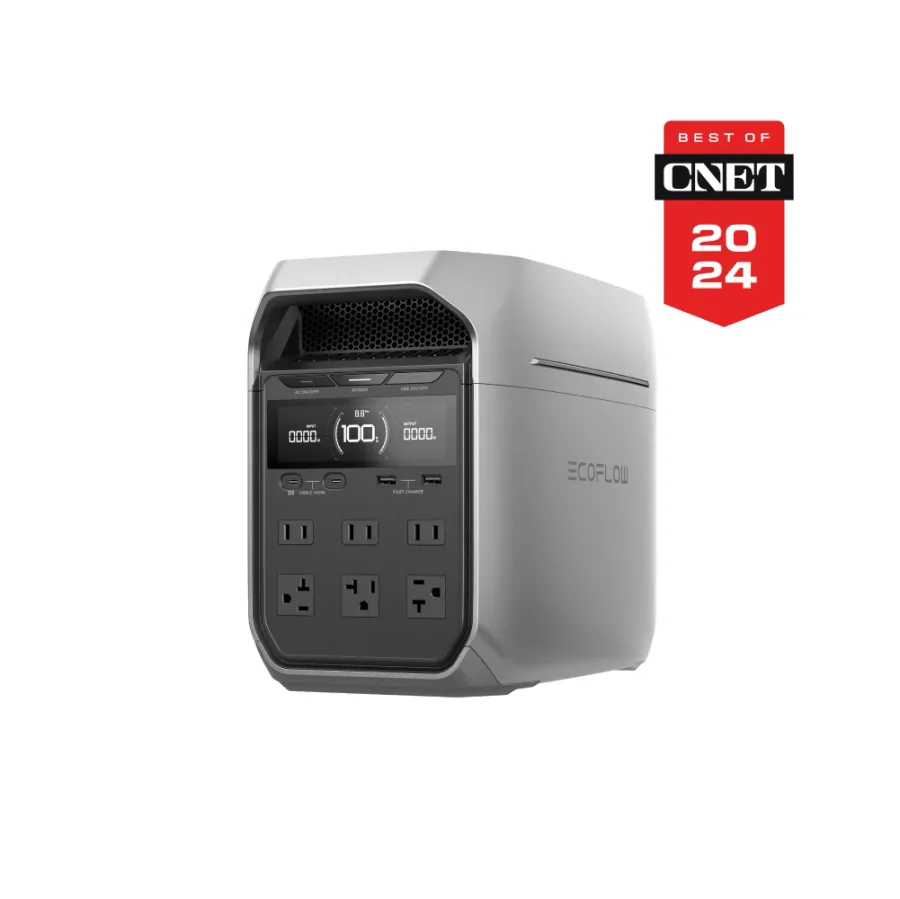
- EcoFlow DELTA 3 Plus: 1024 Wh and 1800 W continuous with 3600 W surge
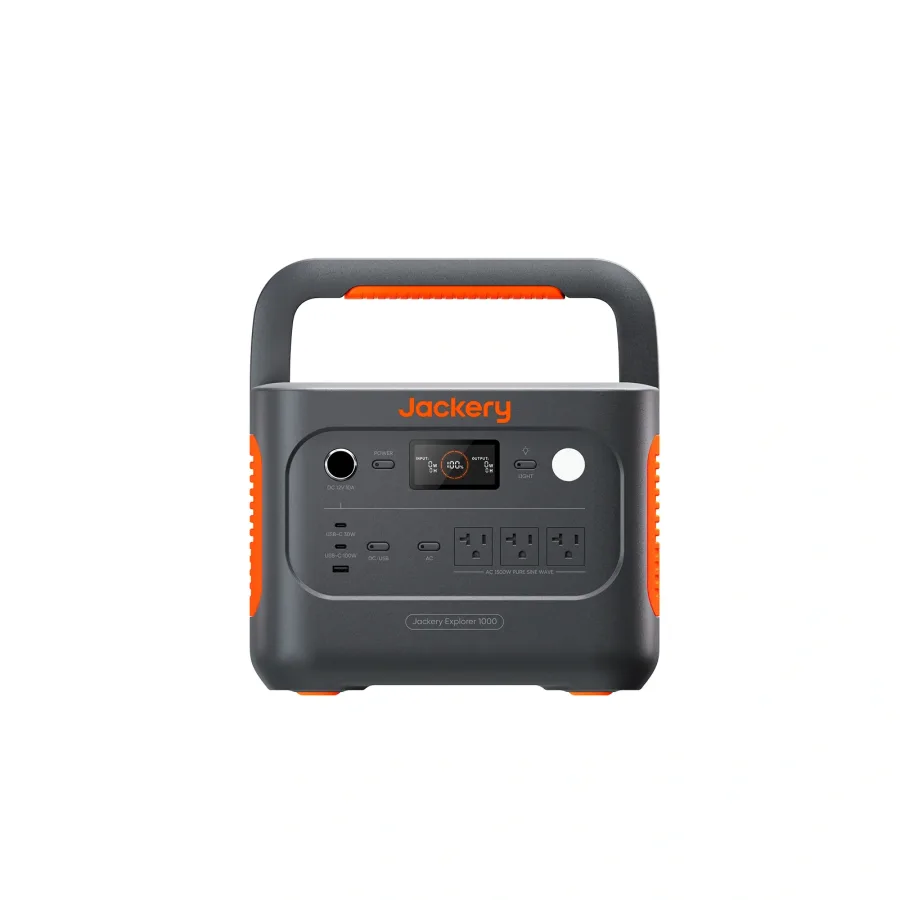
- Jackery Explorer 1000 v2: 1070 Wh and 1500 W continuous with 3000 W surge
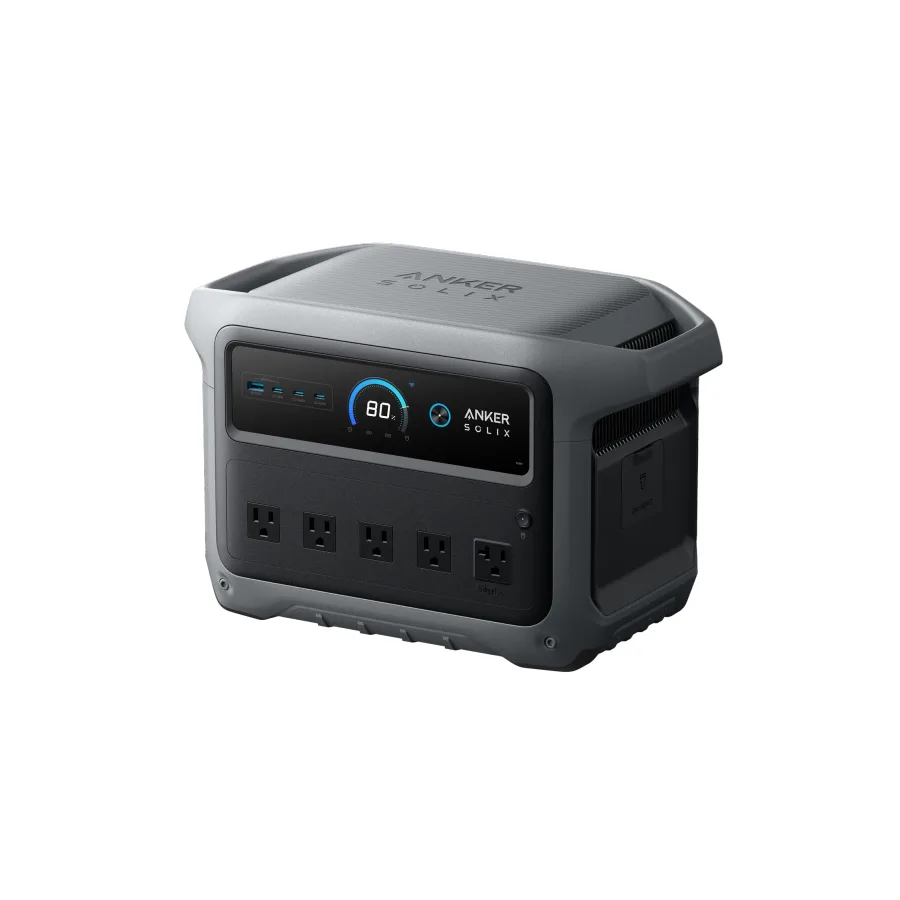
- Anker SOLIX C1000 Gen 2: 1024 Wh and 2000 W continuous with 3000 W peak
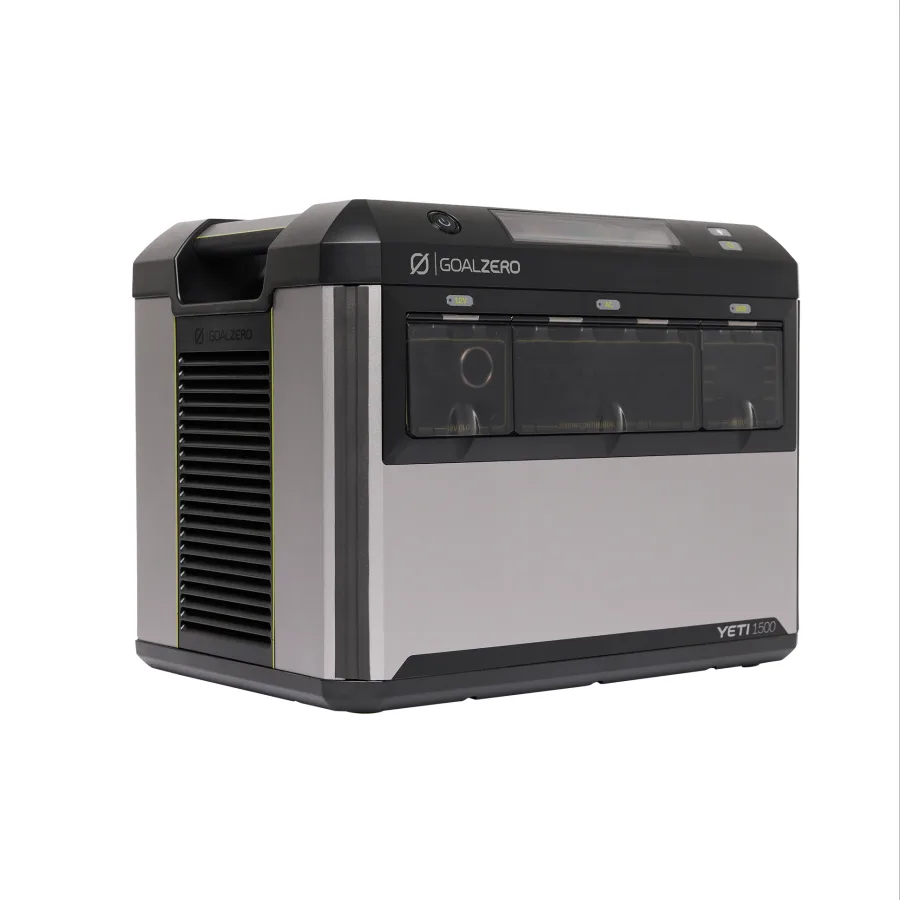
- Goal Zero Yeti 1500: 1505 Wh and 2000 W continuous with 3600 W surge
How fast do they recharge and from what?
Charge times are the maker's figures. EcoFlow states 56 minutes from empty to full on AC and Anker states 49 minutes. Jackery lists 1.58 hours and Goal Zero lists 1.1 hours in fast mode. All four list a solar input from 400 W on the Jackery up to 1000 W on the EcoFlow.
Three of the four state a UPS switchover time. EcoFlow and Anker quote 10 ms and Goal Zero quotes under 15 ms. Jackery's spec sheet does not give a switchover time.
Which station suits a home outage?
Capacity in Wh is the maker's figure and the shortlist spans 1024 Wh to 1505 Wh. EcoFlow and Anker state that extra batteries expand the pack and Jackery's Explorer 1000 v2 does not expand. Goal Zero's Yeti 1500 weighs 52.75 lb against 23.8 lb for the Jackery according to the makers.
From our shortlist
A 1,024 Wh LFP station rated for 1,800 W with 10 ms UPS and 1,000 W solar input.
A 1,070 Wh LiFePO4 station rated for 1,500 W with two USB-C ports and 400 W solar input.
A 1,024 Wh LiFePO4 station rated for 2,000 W that the maker says recharges in 49 minutes.
A 1,505 Wh LiFePO4 station rated for 2,000 W with four USB-C ports and 900 W solar input.
Related questions
Does a power station work with solar panels?
All four makers list a solar input. EcoFlow states 1000 W through its MPPT input and Goal Zero states 900 W combined. Anker lists 600 W and Jackery lists 400 W as the DC input maximum on its spec sheet. The figures are the maker's maximum and not a measured yield.
Which power station is the lightest?
Jackery states 23.8 lb for the Explorer 1000 v2 and EcoFlow states 27.6 lb for the DELTA 3 Plus. Goal Zero states 52.75 lb for the Yeti 1500 and that pack also holds the most capacity at 1505 Wh. Anker lists no weight in the data on our shortlist so the four cannot be ranked.
More questions
Some links on this site are affiliate links. If you buy something after clicking one, the store may pay us a commission. The price stays the same for you, and commissions do not decide which emergency supplies we recommend.